Why the Price of the Film Does Not Determine the True Cost of Packaging
In our Fresh Plaza interview, we touched upon shelf-life problem-solving. But what does it technically mean to intervene in the preservation processes of the fresh-cut sector?
The market is saturated with generalist suppliers selling plastic films at rock-bottom prices, fueling a relentless race to the bottom. However, these suppliers ignore (or omit) a fundamental variable: the complex biological dynamics that occur inside the sealed bag. The result of this cost-cutting approach is that the client saves a few cents on the packaging upfront, only to deal with premature product obsolescence.
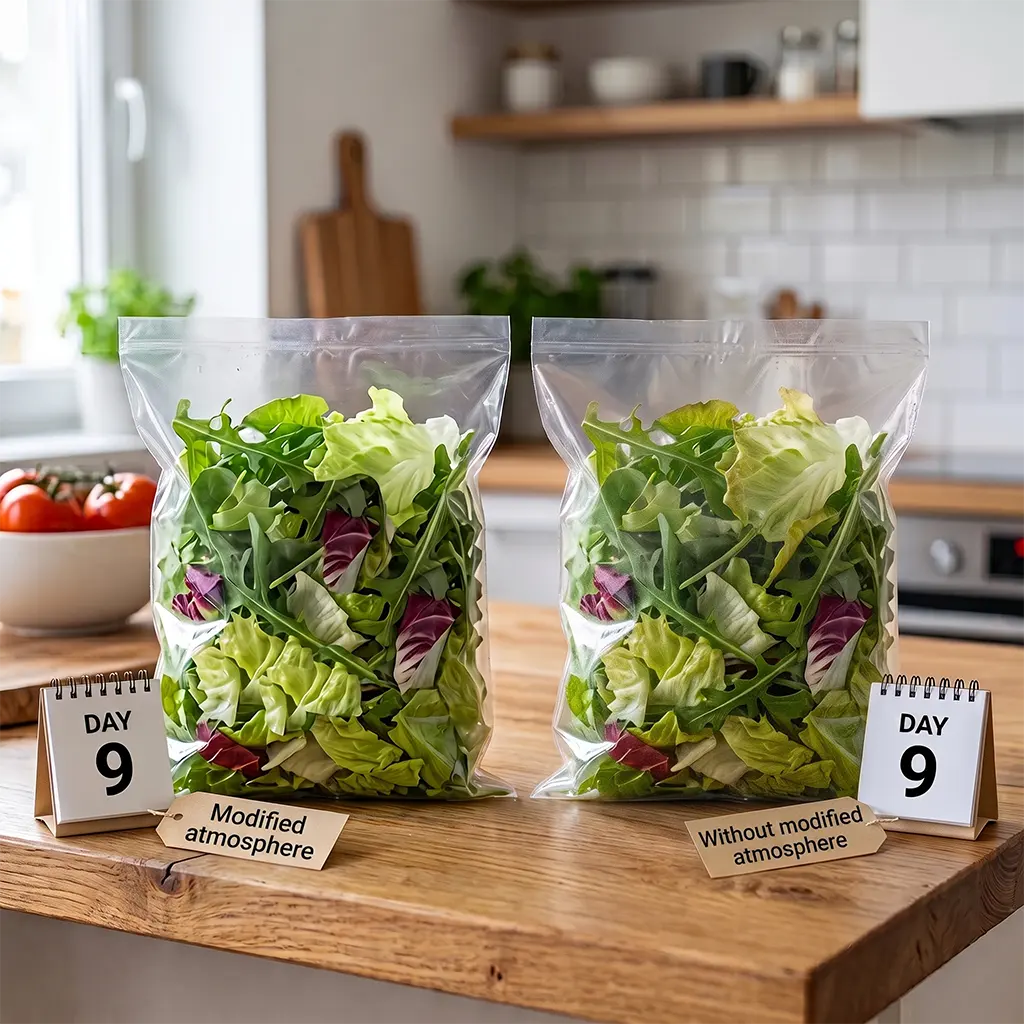
Deterioration is not uniform. Salads continue to ferment even after packaging. This phenomenon is particularly critical for “white salads” (such as iceberg, romaine, and sugarloaf chicory), which undergo rapid and aggressive oxidation upon exposure to oxygen once cut.
Alvapack’s true competitive advantage lies not just in supplying premium-quality antifog films, but in providing advanced technical consultancy on Modified Atmosphere Packaging (MAP). We don’t merely supply plastic; we engineer the exact gas mixture required for each specific type of salad or blend.
Here is how we actively optimize your processes:
-
Targeted Balancing and Custom Formulations: Cut-edge oxidation is prevented by strictly controlling the internal environment. Through our custom mixtures, we outline how to extract excess oxygen, drastically reduce carbon dioxide, and introduce specific percentages of nitrogen to halt oxidation and slow the ripening process.
-
Leveraging Inert Gases for Uncompromising Quality: For clients targeting absolute excellence, we provide consultancy on the use of noble gases like argon and/or helium. While carrying a premium over nitrogen, these inert gases maintain extraordinary crispness and superior organoleptic properties—a true differentiator for premium lines focused on preserving the real “heart” of the salad.
-
Unequivocal Technical Results: The precise application of our parameters guarantees the immediate arrest of the oxidative process and uncontrolled fermentation.
-
Commercial Impact and ROI: By applying our know-how, we successfully extend product preservation from the standard 5+1 days up to 8/9+1 days.
The new European Green Claims Directive (the anti-greenwashing legislation, fully applicable by late September) marks the end of generic or undocumented environmental declarations. Using claims such as “eco-friendly” or “reduced emissions” on packaging will no longer be permitted without supporting technical studies and unequivocal traceability. Simultaneously, the new PPWR (Packaging and Packaging Waste Regulation) will impose strict deadlines: a minimum content of 10% post-consumer recycled plastic by 2030, set to increase to 25% by 2040.
How do we support our clients through this complex regulatory transition while guaranteeing the absolute food safety required by the fresh-cut sector?
Alvapack’s response is structured around two certified product lines and the adoption of advanced chemical recycling:
The Bio-Circular Line (Already active and certified) This line represents a fully operational commercial offering readily available to our clients. Backed by rigorous ISCC Plus certification, it utilizes polymers derived from second-generation biomasses, specifically Used Cooking Oil (UCO). We transform a highly polluting waste product into a precious resource, drastically reducing reliance on fossil fuels and lowering the packaging’s carbon footprint.
The Circular Line (The true innovation in response to the PPWR) While the Bio-Circular solution is an established reality that we have successfully offered for several years, the true innovation with which Alvapack anticipates the 2030 regulatory mandates is the implementation of the Circular category extension, which we will officially obtain by August.
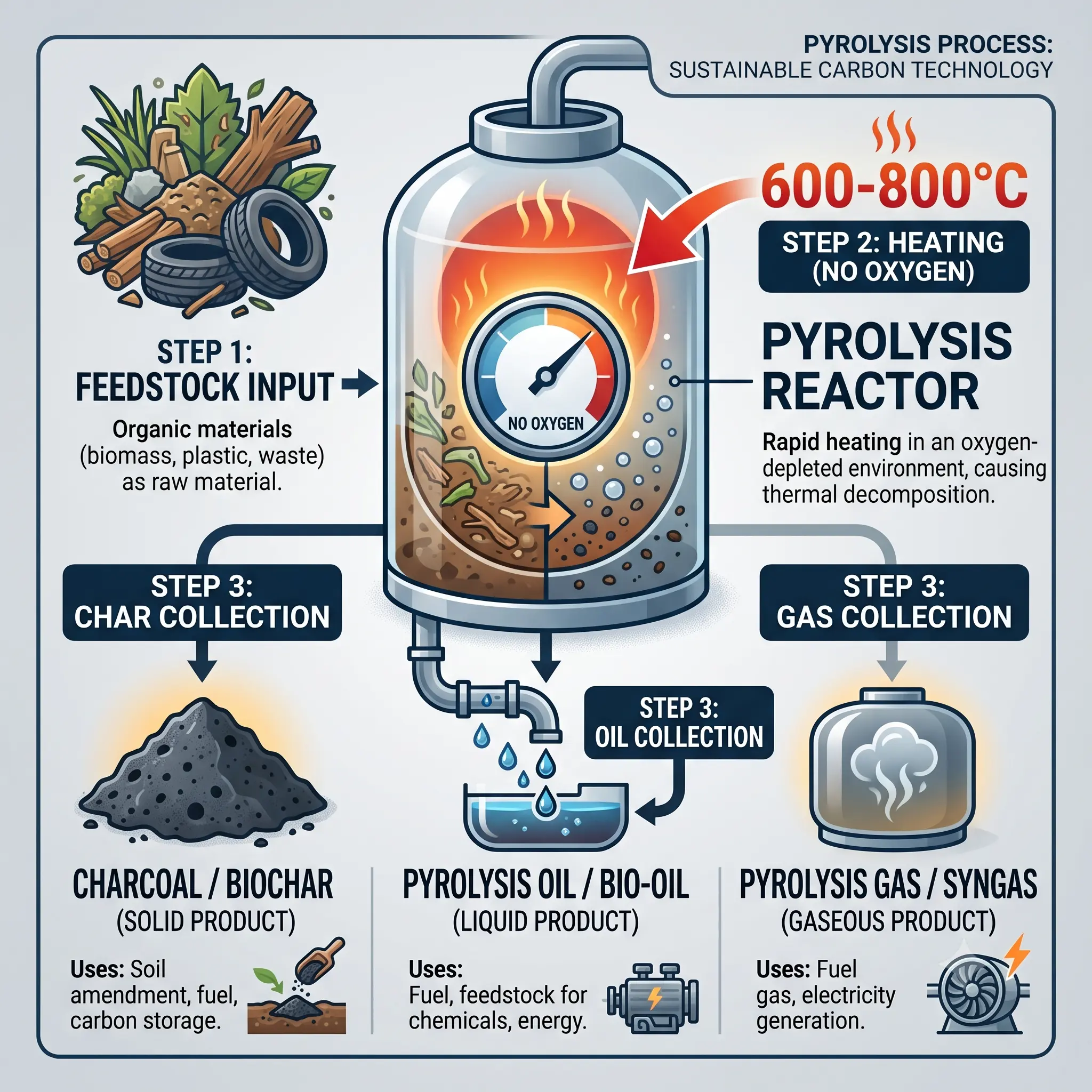
In the food sector, traditional mechanical plastic recycling cannot guarantee the purity requirements necessary for direct food contact. That is why we rely on chemical recycling via pyrolysis.
The Process: Post-consumer plastic waste is broken down at the molecular level at extremely high temperatures (pyrolysis), transforming it into “pyrolysis oil.”
The Technical Advantage: A 100% virgin polymer is synthesized from this oil. The resulting film possesses the exact same excellent optical, mechanical, and barrier properties (antifog and sealability) as its fossil-based counterpart, but with a circular starting base that is perfectly suited for food contact.
Penalty-Proof Traceability: Mass Balance Having a sustainable product is not enough if it cannot be measured and concretely demonstrated to clients and regulatory bodies. Alvapack guarantees total regulatory compliance through the Mass Balance principle, an international accounting standard recognized by the ISCC Plus certification.
How it works: During production, sustainable raw materials (Circular or Bio-Circular) are inevitably mixed with fossil ones within the same facilities. Mass Balance allows for the administrative tracking of the exact flow of these materials.
Mathematical Guarantee: We monitor and certify that the quantity (in tons) of sustainable raw material purchased and placed into inventory corresponds down to the gram to the quota of sustainable film sold and invoiced to the final client.

Heptachrome and QRS Technology: High definition, zero solvents, and cost reduction
The adoption of certified materials (such as Bio-Circular or Circular) inherently impacts the cost of raw materials compared to traditional fossil polymers. How can a company absorb this price increase without passing it entirely onto the final product and without eroding its margins?
Alvapack’s answer lies in recovering efficiency during the conversion phase. We have revolutionized our printing department by implementing QRS technology—which guarantees superior graphic definition and qualitative resolution—paired with a brand-new Heptachrome (extended gamut) printing system using water-based inks.
But exactly where are the savings generated to offset the costs of “green” materials? The secret lies in abandoning traditional spot color printing (where each Pantone is physically mixed) in favor of a fixed 8-color water-based palette.
Here is a detailed breakdown of how this technology drastically cuts hidden production costs:
-
Eliminating Machine Downtime (Setup): In traditional printing, every graphic changeover requires emptying the ink fountains, deep cleaning the rollers, and inserting new, client-specific colors (resulting in hours of downtime). With Heptachrome printing, the 8 colors on the press are fixed, and optical combinations recreate any Pantone shade. Job changeovers are immediate: without changing the ink, the system produces without interruption, slashing hourly processing costs.
-
Elimination of Solvent Purchasing Costs: The exclusive use of water-based inks completely eliminates the root need to purchase chemical solvents, which are strictly necessary in traditional systems for both color dilution and mechanical cleaning.
-
Sharp Cut in Disposal Costs (Special Waste): Exhausted chemical solvents, printing residues, and soiled cleaning materials are classified as special and hazardous waste. The storage, management, and disposal of these substances (in addition to abatement systems for Volatile Organic Compounds – VOCs) represent a massive economic burden for companies. Water-based colors nullify these environmental and administrative expenses.
-
Zero Waste of “Dedicated” Inks: Pantones mixed specifically for a single batch often generate leftovers that age in the warehouse and eventually get discarded. The primary colors of the Heptachrome system, running continuously across all batches, are consumed entirely.
The Premier Application: The Paper-Polypropylene Laminate
This technology is yielding extraordinary aesthetic and economic results in the production of antifog paper-polypropylene laminates. In this format—increasingly in demand by premium fresh-cut brands—the transparent plastic window enhances and protects the product, while the paper band is printed at ultra-high resolution using our eco-friendly Heptachrome process.